The real reason group rides go wrong and how to stay protected
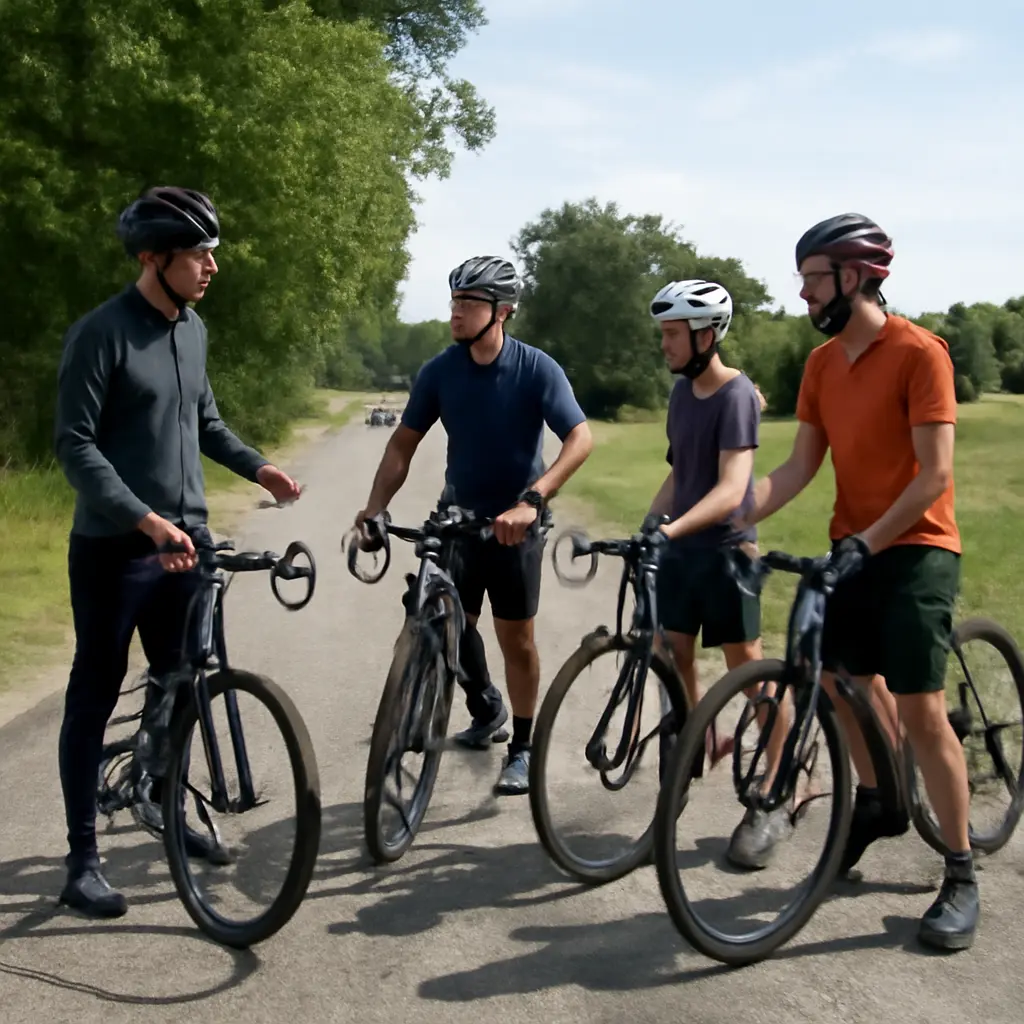
Group rides go wrong less often because of one reckless cyclist than because small communication failures, mismatched expectations, and poor spacing compound across the group. A group ride is a shared road activity in which riders travel together, so its safety depends on predictable behavior as much as individual skill. The U.S. National Highway Traffic Safety Administration reported 1,166 bicyclist traffic deaths in 2022, underscoring the stakes of road safety; that figure covers all bicyclists, not group rides specifically. Clear ride roles, agreed signals, suitable grouping, and practical protective measures help reduce avoidable risks.
Why group rides fail: communication and coordination
A group ride is a coordinated movement of cyclists sharing a route and road space. The League of American Bicyclists’ group-riding guidance emphasizes communication, predictability, and riding within one’s ability. In practice, a ride can unravel when riders do not know the route, pace, formation, or meaning of signals. A warning that reaches only the front or only the back of a group is not effective communication.
Unclear expectations and pace
Pace mismatch occurs when a ride advertised as social or beginner-friendly moves at a speed that leaves some riders struggling. Fatigue can reduce attention and make it harder to hold a line or respond to hazards. Before departure, organizers should state the expected pace, distance, terrain, regrouping points, and whether the ride will wait for dropped riders. Riders should choose a group that matches their ability rather than trying to keep up at any cost.
Signals that do not travel through the pack
A call or hand signal is useful only if riders behind can receive and relay it. USA Cycling’s riding guidance encourages riders to communicate hazards and changes in speed or direction. Use short, consistent calls such as “slowing,” “stopping,” or “car back,” and repeat them clearly without shouting in a way that creates alarm. Point out hazards only when it is safe to do so; never take a hand off the bars if doing so would destabilize the bike.
How group formation and spacing affect safety
Formation determines how much road the group occupies and how closely riders follow one another. Two common forms are single file and two abreast, but what is lawful depends on local traffic rules and conditions. Close drafting can reduce wind resistance, yet it leaves less time and space to react. The closer the wheels, the more important steady speed, smooth braking, and attention become.
Single file, two abreast, and lawful positioning
Single file generally narrows the group’s footprint and may be appropriate on narrow roads, around traffic, or where visibility is limited. Riding two abreast may be permitted in some jurisdictions and prohibited or restricted in others. The group should check local law, keep a predictable line, and move into single file when conditions require it. Avoid spreading across a lane or making sudden lateral moves to pass another rider.
Following distance and the risk of a pile-up
Following distance is the space that allows a rider to respond to braking, debris, or a wobble ahead. There is no single safe gap for every group: speed, road surface, visibility, weather, and rider experience all matter. Newer riders should leave more room and avoid overlapping wheels, a position in which a front wheel sits beside the rear wheel ahead. Smooth acceleration and gradual braking help prevent a small speed change from turning into a chain reaction.
How to stay protected before and during a ride
Protection combines preparation, equipment, and decisions made on the road. The Centers for Disease Control and Prevention recommends bicycle helmets as a key injury-prevention measure; helmet fit and correct fastening matter. A helmet cannot prevent every crash or injury, so it should be part of a broader safety plan rather than a substitute for predictable riding.
Pre-ride briefing and equipment check
A brief check before rolling can reveal problems while the group is still stationary. Confirm that brakes work, tires are properly inflated and undamaged, wheels are secure, and lights are functioning when visibility calls for them. The ride leader should identify a front leader and a sweep rider, explain signals, review the route and regroup points, and share an emergency contact plan. Riders should carry water, basic repair supplies, and any personal medication they may need.
Road position, visibility, and judgment
Riders should follow applicable traffic laws, stay alert at intersections, and avoid assuming that drivers or other cyclists have seen them. Bright clothing and functioning lights can improve conspicuity, especially in low light, though visibility aids do not guarantee that others will notice a rider. If a road becomes too narrow, fast, or hazardous for the group’s size, split into smaller groups or choose a safer route. Anyone who feels pressured to ride beyond their skill or comfort should move out of the formation and tell the leader.
A practical example: preventing a cascade of mistakes
Imagine a large ride approaching a pothole on a narrow road. The front rider swerves without warning; the next rider brakes sharply; riders close behind overlap wheels; and the back of the group is still accelerating. The initial hazard is only part of the problem—the cascade comes from surprise, tight spacing, and a warning that was not relayed. A safer response is to call out the hazard early, point only when stable, hold a predictable line when possible, and allow riders behind time to adjust. If the road does not provide enough room, the leader can slow the group and reorganize before proceeding.
Conclusion: make predictability the group’s safety habit
Group rides most often become dangerous when unclear expectations meet poor communication, unsuitable spacing, or pressure to keep up. A pre-ride briefing, suitable formation, repeated signals, adequate following room, and sound equipment checks address those risks together. Riders and organizers should check local road rules, select routes and paces that fit the group, and treat regrouping as a normal part of the ride—not a failure. For further guidance, consult the League of American Bicyclists, USA Cycling, and public-health bicycle-safety resources.
Sources: National Highway Traffic Safety Administration, Traffic Safety Facts: Bicyclists, 2022 Data, https://crashstats.nhtsa.dot.gov/Api/Public/ViewPublication/813590; League of American Bicyclists, Group Riding, https://bikeleague.org/ridesmart/ride/; USA Cycling, Safe Riding, https://usacycling.org/safe-riding; Centers for Disease Control and Prevention, Bicycle Safety, https://www.cdc.gov/transportation-safety/about/bicycle-safety.html
Related Post
The Inseam Mistake Cyclists Keep Making and How to Get It Right
A cycling inseam is a body measurement used to estimate leg length, but it is [...]
Moisture Management Changes Everything About Cycling Comfort
Cycling moisture management is the way clothing handles sweat and rain to help riders stay [...]