Moisture Management Changes Everything About Cycling Comfort
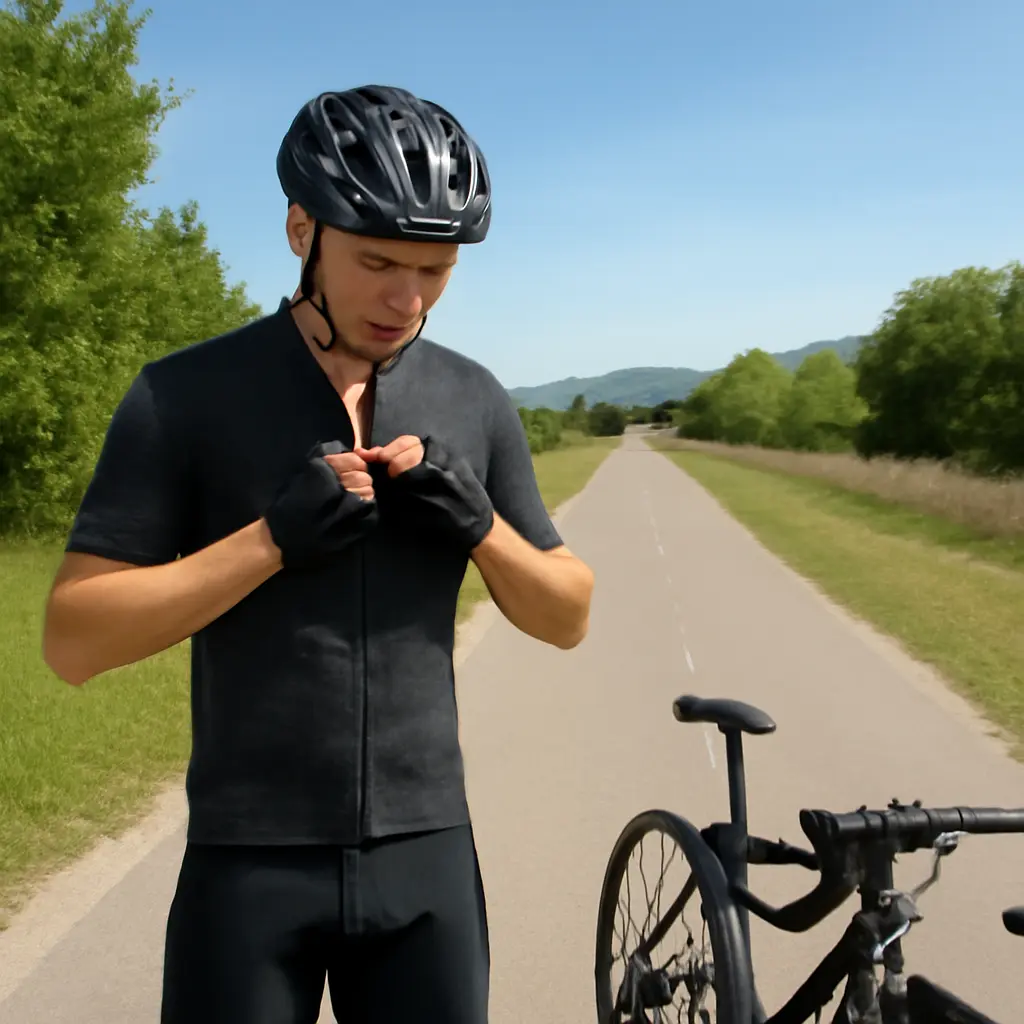
Cycling moisture management is the way clothing handles sweat and rain to help riders stay more comfortable across changing effort and weather. Fabrics that move sweat away from the skin, dry efficiently, and work with suitable layers can reduce the clammy feeling that often follows hard riding or a sudden slowdown. The practical difference is not simply “synthetic versus natural”: fit, fabric construction, ventilation, weather protection, and ride intensity all matter. Understanding those factors helps cyclists choose jerseys, base layers, shorts, and outerwear for comfort without treating sweat-wicking claims as a guarantee of dryness.
How cycling clothing manages moisture
Moisture management describes how a fabric absorbs or spreads liquid sweat, transports it toward the outer surface, and releases it through evaporation. The American Society for Testing and Materials (ASTM) evaluates textile moisture behavior using measures such as liquid-moisture transport and drying performance; these are distinct properties, not one universal “breathability” score. In practical cycling terms, a garment can feel comfortable when it limits persistent wet contact with the skin while allowing heat and water vapor to escape.
The need varies with conditions. Exercise generates heat and sweat, while airflow over a moving cyclist can speed evaporation—and also increase cooling when wet clothing is exposed to wind. The National Institute for Occupational Safety and Health (NIOSH) notes that sweat cools the body as it evaporates; when evaporation is limited by high humidity, heavy clothing, or insufficient airflow, cooling becomes less effective. That is why moisture control involves balancing sweat transfer with ventilation and weather protection.
Wicking, absorption, and evaporation
Wicking is the movement of liquid along or through fibers, often aided by capillary action and fabric structure. Absorption is the amount of liquid a material takes up, while evaporation is the change from liquid water to vapor. A fabric may wick well without absorbing much water, or absorb a great deal but dry slowly. For riders, the useful outcome is a garment that spreads sweat over an area where it can evaporate, rather than leaving concentrated wet patches beneath straps, pockets, or close-fitting panels.
Breathability and air permeability
Breathability generally refers to water-vapor transfer through a material; air permeability describes how readily air passes through it. The terms are related but not interchangeable. A windproof shell can restrict airflow yet still permit some vapor transmission, while a mesh jersey may allow abundant airflow but offer little protection from wind or rain. The European Committee for Standardization’s EN 343 framework treats rain protection and water-vapor resistance as separate aspects of protective clothing, illustrating why riders should assess weather protection and ventilation independently.
Fabric choices shape cycling comfort
Once the mechanisms are clear, fabric choice becomes a matter of matching material behavior to the ride. Fiber type matters, but yarn shape, knit or weave, fabric weight, surface treatments, and garment construction can change performance substantially. Labels such as “moisture-wicking” are useful starting points, not standardized promises that every product will feel the same in every climate.
Polyester and other synthetic fabrics
Polyester is widely used in cycling jerseys because it is relatively lightweight, can be engineered to spread liquid, and typically holds less water within the fiber than cotton. Nylon is also common, especially in durable garments and shorts. Neither material is automatically cool or quick-drying: dense construction, a water-repellent finish, poor fit, or a lack of ventilation can impede comfort. Research methods described in ASTM D737 for air permeability and AATCC TM195 for liquid-moisture management show that textile performance depends on measurable construction and test conditions, not fiber names alone.
Merino wool and blended fabrics
Merino wool can absorb moisture vapor into its fibers and is often valued for temperature moderation and odor management. Because it can hold moisture, a wool garment may feel different from a low-absorbency synthetic when heavily soaked, and its drying time depends on fiber weight and construction. Blends combine properties—for example, wool with synthetics for durability or improved drying—but the result is product-specific. Riders should compare fabric weight, fit, care instructions, and intended conditions rather than assume one fiber is best for all rides.
Cotton and moisture-heavy clothing
Cotton readily absorbs liquid and can remain wet against the skin during prolonged exertion. In warm conditions, that may feel heavy and clingy; in cool, windy conditions, wet fabric can contribute to rapid heat loss. Cotton is not inherently unsafe for every short or easy ride, but it is often less practical for sustained cycling where sweat, rain, and airflow combine. A useful test is to consider what happens after the rider stops: clothing that stays saturated can feel much colder when evaporative cooling continues.
Moisture management by garment and riding condition
Fabric performance becomes meaningful only in the garment system. A close-fitting base layer, ventilated jersey, cycling shorts, and protective outer layer each influence where sweat collects and how quickly it can escape. The right combination changes with effort, terrain, and weather, so a summer climb and a damp winter commute call for different priorities.
Base layers and jerseys
A base layer sits next to the skin and is intended to manage the first stage of sweat transfer. Mesh or lightweight knit designs can improve airflow in heat, while heavier or long-sleeved layers may add insulation in cold conditions. Jerseys add storage, fit, and ventilation; front zippers and breathable panels help riders adjust heat release. If a base layer is too loose, it may not maintain consistent contact; if too tight or too warm, it may restrict airflow and trap heat.
Cycling shorts, padding, and friction
Shorts and chamois pads manage moisture in a high-friction area where fit is especially important. A well-positioned pad can reduce movement and rubbing, while seams and excess fabric can create pressure points. Sweat, rain, and prolonged contact may increase skin irritation for some riders, although discomfort can also result from saddle fit, hygiene, or an unsuitable pad. Choose shorts designed for cycling, follow the manufacturer’s care instructions, and change out of wet kit promptly after a ride when practical.
Rainwear, wind shells, and layering
Waterproof and wind-resistant garments protect against external weather but can limit vapor escape, particularly during hard efforts. A breathable membrane does not eliminate internal condensation when sweat production exceeds the garment’s ability to transfer vapor. For changeable conditions, cyclists can use adjustable vents, front zips, removable layers, and a lighter pace on climbs to regulate heat. In cold weather, the aim is not to prevent all sweating; it is to avoid becoming heavily wet before a descent or stop, when airflow can make damp clothing feel chilling.
Choosing and caring for moisture-managing kit
A practical selection process starts with the ride rather than a product claim. Consider expected temperature, humidity, precipitation, duration, effort, and whether the route includes exposed descents or long stops. The Centers for Disease Control and Prevention advises adapting activity and clothing to heat conditions and taking steps to stay hydrated; moisture-managing apparel can support comfort but cannot prevent heat illness or replace sensible pacing, shade, and fluid access.
Match clothing to effort and weather
- For hot, high-effort rides, prioritize lightweight fabrics, open ventilation, and a fit that does not obstruct movement.
- For cool rides, use layers that can be opened or removed before sweat accumulates, then add protection for descents or stops.
- For rain, distinguish water resistance from waterproofing and consider whether the shell can vent enough vapor for the planned effort.
- For long rides, test clothing on shorter outings first; pocket placement, seams, and chamois fit matter as much as fabric claims.
Care, odor, and performance over time
Sweat salts, skin oils, detergent residue, and fabric softener can affect feel and performance. Wash kit according to its care label, use an appropriate detergent, and avoid fabric softener when the manufacturer advises against it, since residues may impair moisture transfer or finishes. Dry garments fully before storage to reduce persistent odor. Waterproof and water-repellent layers may need periodic cleaning or renewed treatment; follow the product’s specific instructions rather than applying heat or chemicals indiscriminately.
A simple real-world comparison
Consider a rider commuting in a cotton T-shirt and a second rider wearing a lightweight cycling jersey on the same warm route. Both may sweat, but the jersey’s cut, ventilation, and fabric construction are designed for riding posture and airflow, so it may feel less clingy and dry more readily. On a cold, rainy commute, however, a jersey alone is not sufficient: a protective shell and adjustable layers become central. This illustrates the key principle—moisture management is a system of material, fit, effort, and weather, not a single-fabric solution.
Conclusion: moisture management changes the ride
Cycling comfort depends on how clothing moves sweat, releases vapor, ventilates, and protects against the elements. Wicking, absorption, breathability, and drying are separate characteristics; synthetic, wool, and blended fabrics each have trade-offs; and garment fit and layering determine whether those properties help in practice. Choose kit for the conditions and effort you expect, test it on real rides, and care for it as directed. For further guidance, compare recognized textile test definitions and consult public-health advice on riding safely in heat and cold.
Sources: ASTM International, ASTM D737 Standard Test Method for Air Permeability of Textile Fabrics, https://www.astm.org/d0737-18.html; AATCC, TM195 Liquid Moisture Management Properties of Textile Fabrics, https://www.aatcc.org/standards/; European Committee for Standardization, EN 343 Protective Clothing—Protection Against Rain, https://standards.cencenelec.eu/; National Institute for Occupational Safety and Health, Heat Stress: Heat-Related Illnesses and First Aid, https://www.cdc.gov/niosh/heat-stress/about/; Centers for Disease Control and Prevention, Heat and Athletes, https://www.cdc.gov/heat-health/about/heat-and-athletes.html.
Related Post

How Helmet Safety Standards Differ Across Age Groups
A helmet’s safety standard is the set of design and testing requirements it must meet [...]
The Inseam Mistake Cyclists Keep Making and How to Get It Right
A cycling inseam is a body measurement used to estimate leg length, but it is [...]