How trail conditions change everything about bike geometry choices
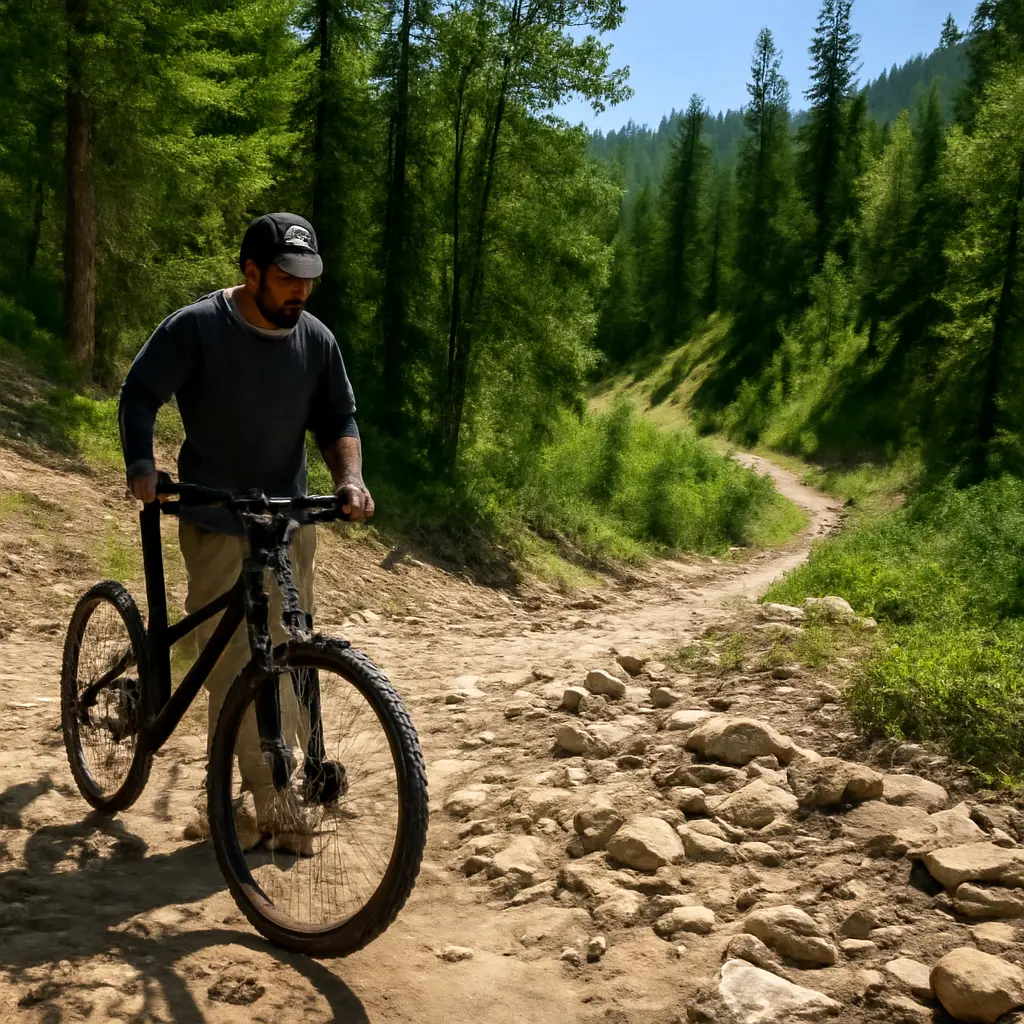
A mountain bike’s geometry is the set of frame and fork dimensions that influence how it steers, climbs, descends, and fits its rider. Trail conditions change which geometry traits matter most: steep, rough descents tend to reward stability and front-wheel control, while tight turns, slow technical climbs, and flatter trails often favor quicker handling and easier maneuvering. There is no universally “best” geometry—head angle, reach, wheelbase, bottom-bracket height, and seat angle work together, and tire choice, suspension setup, and rider skill can matter just as much. Understanding those trade-offs helps riders choose a bike for the terrain they actually ride rather than chasing a single fashionable number.
Trail conditions and bike geometry choices
Bike geometry describes the relationships among a bicycle’s frame, fork, wheels, and contact points. For mountain bikes, those measurements shape handling but do not determine it alone: trail surface, gradient, corner frequency, obstacles, bike category, and rider position all influence the result. The International Mountain Bicycling Association describes trails as varied environments that can include natural features, constructed obstacles, and changing grades, which is why a bike that feels composed on a fast descent may feel cumbersome on a narrow, winding climb.
The practical choice is a balance. Steeper, faster, and rougher terrain generally increases the value of stability and predictable steering. Tight, slow, or rolling trails increase the value of agility, ground clearance, and efficient climbing posture. Geometry figures should therefore be read as a connected system and compared among bikes of similar category and size—not treated as isolated proof that one bike is superior.
How trail demands shape mountain-bike geometry
Mountain-bike geometry is the measurement and arrangement of frame and fork dimensions that establish rider position and wheel behavior. Bicycle-design references such as Sheldon Brown’s technical guides explain that steering geometry, including head angle and fork offset, affects how a bicycle responds to steering input. In trail riding, the same design choices interact with wheelbase, reach, suspension, tires, and rider movement.
The main trail-condition groupings are not rigid categories, but they offer a useful decision framework:
- Fast, steep, rough trails place a premium on composure, traction, and room to move behind the front wheel.
- Tight, slow, technical trails reward maneuverability, easy front-wheel placement, and clearance over obstacles.
- Long climbs and rolling terrain make seated position, front-wheel tracking, and pedaling efficiency more noticeable.
- Mixed trails call for compromise: a geometry package that is predictable across conditions rather than exceptional in only one.
Steep, fast, and rough trails
On steep descents, a relatively slack head angle and longer wheelbase can help a bike feel less nervous as speed rises. A longer reach can also give the rider more room to shift their weight, while a suitably low bottom bracket can help keep the bike planted through turns. These effects are conditional: an excessively long or low bike may be harder to turn in tight sections and more likely to strike pedals on rocks.
A useful real-world reference is the modern enduro category. The Enduro World Series, now part of the UCI’s Enduro World Cup structure, uses timed downhill stages linked by untimed transfers, so competitors need bikes that descend aggressively while remaining manageable between stages. That format illustrates why enduro bikes often combine downhill-oriented stability with enough climbing position and pedaling function for long transfers; it does not mean every trail rider needs enduro geometry.
Tight, slow, and technical trails
On narrow trails with frequent switchbacks, rocks, roots, and low-speed turns, a shorter wheelbase and responsive steering can make it easier to change direction and place the front wheel precisely. A somewhat higher bottom bracket may provide more pedal clearance over obstacles, though raising it can also raise the rider’s center of mass and reduce the settled feel some riders prefer in corners.
These trails also show why geometry cannot replace technique. A rider who keeps their weight centered, looks through turns, and manages braking can often guide a stable bike through tight terrain. Conversely, a very agile bike may feel twitchy at speed. Test rides on representative trails are more informative than relying on a geometry chart alone.
Long climbs and rolling terrain
On sustained climbs, a steeper effective seat-tube angle tends to place the rider farther forward relative to the bottom bracket, which can help keep weight over the front wheel and support seated pedaling. Reach and cockpit setup also matter: if the rider is stretched too far, climbing comfort and control can suffer; if the front end is too short or upright for the rider, the front wheel may wander on steep pitches.
Rolling trails mix climbs, descents, and flat connectors, so neither downhill stability nor climbing posture can dominate every decision. Riders who cover long distances may value a balanced trail or cross-country design, while riders prioritizing descents may accept extra weight and a less lively climbing feel. The right choice depends on how much time is spent climbing, descending, and pedaling between features.
Key geometry attributes and their trail trade-offs
Geometry measurements are useful only when their definitions and limitations are clear. Manufacturers may measure or label some dimensions differently, and frame size changes the context. Compare complete geometry charts, confirm the bike’s size, and consider suspension sag and fork setup, which alter the bike’s effective position on the trail.
Head angle and fork offset
The head angle is the angle of the steering axis relative to the ground. A slacker angle generally places the front wheel farther ahead and can improve confidence on steep descents, while a steeper angle commonly gives quicker steering and can suit tighter, slower trails. Fork offset—the distance between the steering axis and the front axle—also affects steering feel and trail, so head angle alone cannot fully predict handling.
For example, two bikes with similar head angles may steer differently if their fork offsets, front-wheel sizes, or tire profiles differ. Treat the head-angle number as a clue, not a verdict, and assess it alongside reach, wheelbase, and intended suspension travel.
Reach, stack, and wheelbase
Reach is the horizontal distance from the bottom-bracket area to the top of the head tube; stack is the corresponding vertical distance. Wheelbase measures the distance between the front and rear axles. Longer reach and wheelbase can create a stable platform and more space for rider movement, while shorter dimensions can make a bike easier to maneuver in confined turns.
These dimensions are strongly affected by frame size and cockpit setup. A rider should not automatically size up to obtain a longer reach: handlebar width, stem length, seat position, and torso proportions all influence fit. A bike that is stable but uncomfortable is not a good match for long rides.
Bottom-bracket height and crank clearance
Bottom-bracket height is the distance from the ground to the center of the crank spindle. A lower position can help a bike feel settled in corners, but it reduces pedal clearance over rocks and roots. A higher position can reduce pedal strikes on rough, slow trails, but may feel less planted in turns.
The effective height changes with tire size, suspension sag, and the bike’s dynamic movement. Riders who experience frequent pedal strikes should first check sag, crank length, pedal technique, and line choice; geometry adjustments such as a flip chip, if provided, are only part of the solution.
Seat-tube angle and climbing position
The effective seat-tube angle describes the seat position relative to the bottom bracket and is a major influence on seated climbing posture. A steeper angle can help keep the rider centered on steep climbs, especially on bikes with long front ends. The actual fit also depends on saddle height, seatpost setback, and the rider’s proportions, so the published angle is not a substitute for a proper fit.
A trail with frequent steep climbs may justify prioritizing a supportive seated position. For a bike used mostly for descending or short climbs, other traits may matter more. As with head angle, compare the whole frame rather than choosing from one specification.
Choosing geometry for your trails
A practical selection process starts with the terrain and the rider, then uses geometry numbers to narrow the options. Trail conditions vary even within one region, and weather can change grip, braking, and impact severity. A wet root-strewn trail, for instance, may demand careful traction management regardless of whether the bike is long or short.
- Describe the trails you ride most: steepness, roughness, corner tightness, climb length, and typical speed.
- Decide which limitation you want to address—descending confidence, low-speed agility, climbing position, or pedal clearance.
- Compare bikes in the same category and frame size, examining head angle, reach, wheelbase, bottom-bracket height, and seat-tube angle together.
- Check fit and setup, including suspension sag, tire pressure, handlebar and stem dimensions, and crank length.
- Test ride on familiar terrain when possible, and assess control and comfort rather than judging only by specification sheets.
A simple comparison chart can help: place trail traits such as “steep,” “tight,” “rough,” and “climb-heavy” in rows, then note which bike feels most controlled in each condition. This makes trade-offs visible without pretending that one geometry figure predicts every ride.
Conclusion: match geometry to the ground
Trail conditions change the value of every major geometry attribute. Steep, fast, rough terrain often rewards stability and room to move; tight technical trails often favor agility and clearance; long climbs make seated position and front-wheel tracking especially important. Head angle, reach, wheelbase, bottom-bracket height, and seat-tube angle should be considered as a connected system, with frame fit, suspension, tires, and riding technique included in the decision.
Before buying or changing a bike, identify the conditions you encounter most, compare complete geometry charts, and test the bike on representative trails. For further guidance, consult a qualified bike fitter or local shop and review manufacturer setup recommendations. The best geometry is not the most extreme—it is the one that supports confident, controlled riding on the trails you actually ride.
Sources: International Mountain Bicycling Association, Trail Solutions: IMBA’s Guide to Building Sweet Singletrack, https://www.imba.com/resource/trail-solutions; Sheldon Brown, Bicycle Glossary and Technical Information, https://www.sheldonbrown.com/glossary.html; Union Cycliste Internationale, Enduro World Cup, https://www.uci.org/discipline/mountain-bike/5W9K4Qy7G7q5hYQ8g9bZgQ; Pinkbike, Mountain Bike Geometry Explained, https://www.pinkbike.com/news/mountain-bike-geometry-explained.html
Related Post
UV Protection Matters More Than You Think on Long Rides
Ultraviolet (UV) protection on long rides means limiting the amount of sun exposure that reaches [...]
Carrying a full workday on two wheels without looking ridiculous
A practical two-wheel workday setup is a bicycle or e-bike paired with clothing, bags, and [...]