Base Layers and Moisture Management for Serious Riders
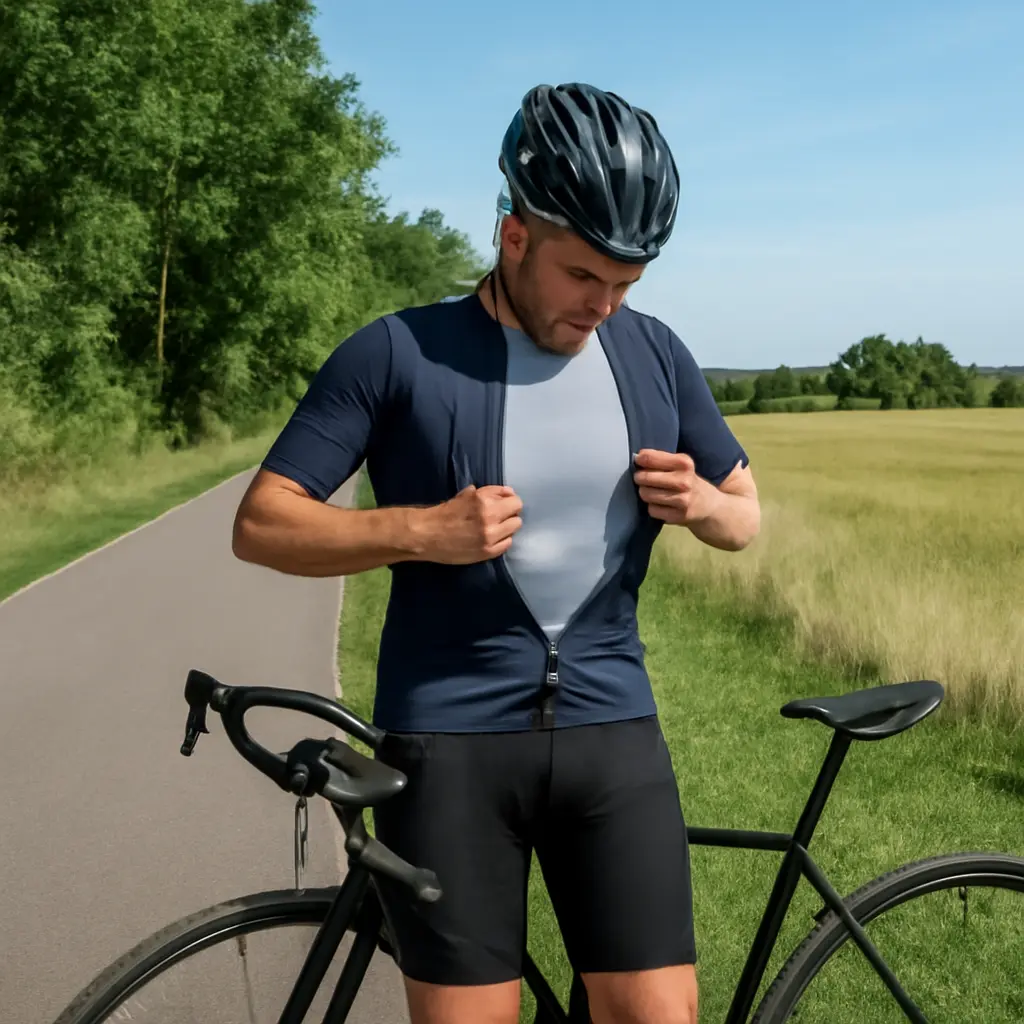
A cycling base layer is the garment worn next to the skin to move sweat away from the body and help manage comfort beneath a jersey or jacket. For serious riders, moisture management depends on choosing a fabric suited to the effort and weather, fitting it close enough to transfer sweat, and pairing it with outer layers that can release heat. The American College of Sports Medicine notes that sweat evaporation is a major way the body cools itself during exercise; when humidity, clothing, or high effort impedes evaporation, heat strain can rise. This guide explains how base layers work, compares common materials and constructions, and offers practical guidance for choosing and caring for them.
Base-layer moisture management: what it means for cycling
Moisture management is a fabric’s ability to absorb, spread, transport, or release liquid sweat and water vapor. In clothing, these are related but distinct processes: a fabric can feel dry because it moves liquid away from the skin, even though it does not absorb much moisture into its fibers. The Textile Institute describes moisture transport as a combination of absorption, wicking, and evaporation, influenced by fiber properties, yarn structure, fabric construction, and the conditions around the garment.
A base layer does not stop sweating or independently regulate core temperature. Instead, it influences the thin layer of air and moisture next to the skin. Its effectiveness depends on the entire clothing system: a highly breathable base layer cannot compensate for a windproof outer garment that traps heat, while an overly loose layer may not move sweat efficiently from the skin.
Wicking, absorption, and drying are different properties
Wicking is the movement of liquid along or through a material, often driven by capillary action in the gaps between fibers and yarns. Absorption is the amount of moisture a fiber takes into its structure. Drying is the rate at which moisture leaves the fabric, usually through evaporation. Polyester commonly absorbs little water into the fiber but can transport liquid through its yarn structure; merino wool absorbs more moisture within the fiber and can buffer some humidity while still feeling comparatively comfortable. Neither fiber is automatically superior: construction, fit, sweat rate, and weather matter.
Why cycling makes moisture control consequential
Cycling creates changing combinations of exertion, wind, and exposure. A rider may generate substantial heat while climbing slowly, then cool rapidly on a descent as airflow increases and damp clothing loses heat. The Centers for Disease Control and Prevention identifies high humidity as a condition that makes it harder for sweat to evaporate and the body to cool. A base layer helps manage the skin-side microclimate, but riders should still adjust pace, ventilation, and clothing to conditions.
There is no single useful percentage for how much better one base-layer fabric performs: laboratory results depend on the test method, fabric, and environmental conditions. For practical comparison, examine fiber content and fabric weight, then consider breathability, drying behavior, fit, seams, and how the garment works beneath the outer layer.
Base-layer fabric attributes determine moisture behavior
The main fabric attributes are fiber type, knit structure, thickness, and surface finish. These attributes affect how sweat spreads and how quickly heat and water vapor can escape. Cycling-specific base layers commonly use synthetic fibers, merino wool, or blends; mesh and brushed constructions adapt those materials for different weather and effort levels.
Synthetic polyester and polypropylene layers
Synthetic base layers are typically made from polyester or polypropylene, sometimes combined with elastane for stretch. Their low moisture absorption can support quick drying, while engineered yarns and knits move liquid across the fabric surface. Lightweight polyester mesh is often useful in warm conditions or during high-output efforts because its open structure can improve ventilation. However, synthetics can retain odor, and a densely knit or heavy synthetic garment may feel clammy if sweat production exceeds evaporation.
Choose a synthetic layer when fast drying, low bulk, and frequent washing are priorities. Check the specific fabric and construction rather than relying on a “moisture-wicking” label alone; that phrase does not establish how a garment will perform in every climate or under every jersey.
Merino wool and wool blends
Merino wool is a fine animal fiber that can absorb moisture within its structure and help moderate changes in humidity near the skin. Riders often value it for comfort across varied temperatures and its tendency to resist noticeable odor during repeated wear. Wool can take longer to dry than a very light synthetic fabric, and a thicker merino garment may become warm during hard efforts. Blends combine wool’s moisture buffering and feel with synthetic fibers’ durability or drying characteristics.
Merino is a useful option for long rides, variable conditions, or riders who prioritize comfort over the fastest possible drying. It is not a substitute for ventilation: on a humid, intense ride, any fabric may remain wet when sweat production exceeds the rate of evaporation.
Mesh, knit structure, and fabric weight
Mesh refers to an open fabric structure that allows air and water vapor to pass through readily. A thin mesh layer can create a small separation between skin and jersey, helping sweat spread and giving airflow access to the damp surface. Other knits use channels, textured zones, or varying thicknesses to balance insulation and ventilation. These design features can help, but their effects depend on the whole clothing system and the rider’s output.
Fabric weight is a practical guide, not a complete performance rating. Lightweight fabrics generally suit warm weather and high intensity; midweight and brushed fabrics add insulation for colder conditions. A winter layer that traps warm air may be appropriate on a cold steady ride but too warm for repeated climbs. Look for a garment that fits the intended temperature and effort rather than selecting solely by material name.
Base-layer fit and layering shape real-world performance
A base layer works as part of a clothing system, so fit and compatibility matter as much as fiber. The layer should contact the skin without restricting breathing, shoulder movement, or riding position. Outer layers then manage wind, rain, insulation, and ventilation. The right combination changes with intensity and weather.
Fit, seams, and coverage
A close fit generally helps a base layer transfer moisture from the skin and reduces bunching under a jersey. It should not be so tight that it limits movement or leaves pressure points. Flat seams, smooth fabric, and appropriate torso length can reduce irritation on long rides. Sleeveless designs maximize arm ventilation; short- and long-sleeved versions add coverage and can integrate more smoothly with cool-weather clothing.
Matching the layer to effort and weather
In warm weather, a very light synthetic or open-mesh layer can support airflow, though some riders prefer no base layer when conditions are hot and humid. In cool conditions, a thin synthetic or merino layer can add comfort beneath a jersey. In cold weather, a midweight or brushed layer can provide insulation, but it should be paired with a breathable outer shell and ventilation that can be adjusted during climbs.
A useful real-world example is a long ride with a cold start, a hard ascent, and a windy descent. Starting in a heavy insulating layer may feel comfortable at first but can lead to excess sweat on the climb. A lighter base layer combined with a packable wind shell may make it easier to regulate temperature: open or remove the shell while climbing, then put it back on before descending. This is a practical strategy, not a guarantee against overheating or chilling.
The outer layer can limit moisture release
Windproof and waterproof garments can reduce heat loss and protect against weather, but they may also limit water-vapor escape. Breathability varies by fabric, garment design, fit, and conditions; even a membrane garment can feel damp inside during high exertion. Use vents, zippers, and removable layers to release excess heat, and avoid assuming that a more protective shell will always keep the clothing system drier from the inside.
Choosing and caring for a cycling base layer
A practical choice begins with the ride, not a universal claim that one material is best. Consider typical temperature and humidity, effort level, ride duration, how readily you overheat, and whether odor control or rapid drying is the priority.
- For hot, hard rides, try a lightweight synthetic or mesh design and test it with your usual jersey.
- For variable temperatures and long rides, compare merino and blended fabrics for comfort, drying time, and care needs.
- For cold rides, select a warmer layer that still allows you to vent during climbs and pair it with an adjustable outer shell.
- Check fit in the riding position, including shoulder reach and torso coverage, and confirm that seams do not rub under a pack or jersey.
- Test new layers on shorter rides before relying on them for an event or remote route.
Follow the garment’s care label. Wash promptly after heavily sweaty rides, use a detergent appropriate for technical fabrics, and avoid fabric softener if the manufacturer advises against it; residues can affect fabric performance. Merino may require gentler washing and drying than many synthetics. Keeping layers clean also helps limit odor and skin irritation.
Conclusion: manage moisture as part of the full clothing system
Base-layer moisture management depends on how fibers, knit structure, fit, effort, and outerwear work together. Synthetics often favor low bulk and rapid drying; merino offers moisture buffering and comfort across changing conditions; mesh and fabric weight help tailor ventilation and insulation. Because sweat evaporation is central to cooling, riders should choose layers for the expected weather and workload, adjust ventilation on the ride, and test their setup before important events. Compare garments by construction and fit—not marketing claims—and consult the American College of Sports Medicine and CDC guidance for broader exercise-heat safety.
Sources: American College of Sports Medicine, Exercise and Fluid Replacement, Medicine & Science in Sports & Exercise, 2007, https://journals.lww.com/acsm-msse/fulltext/2007/02000/exercise_and_fluid_replacement.22.aspx; Centers for Disease Control and Prevention, Heat and Athletes, https://www.cdc.gov/heat-health/about/athletes.html; The Textile Institute, Textile Terms and Definitions, 12th edition, https://www.textileinstitute.org/product/textile-terms-and-definitions/
Related Post

Sensor compatibility matters more than you think when choosing a bike computer
A bike computer is only as useful as the data it can receive and interpret. [...]
Stop Wasting Money on the Wrong Suspension Setup
The right suspension setup matches your vehicle, load, terrain, and driving priorities—not the most expensive [...]