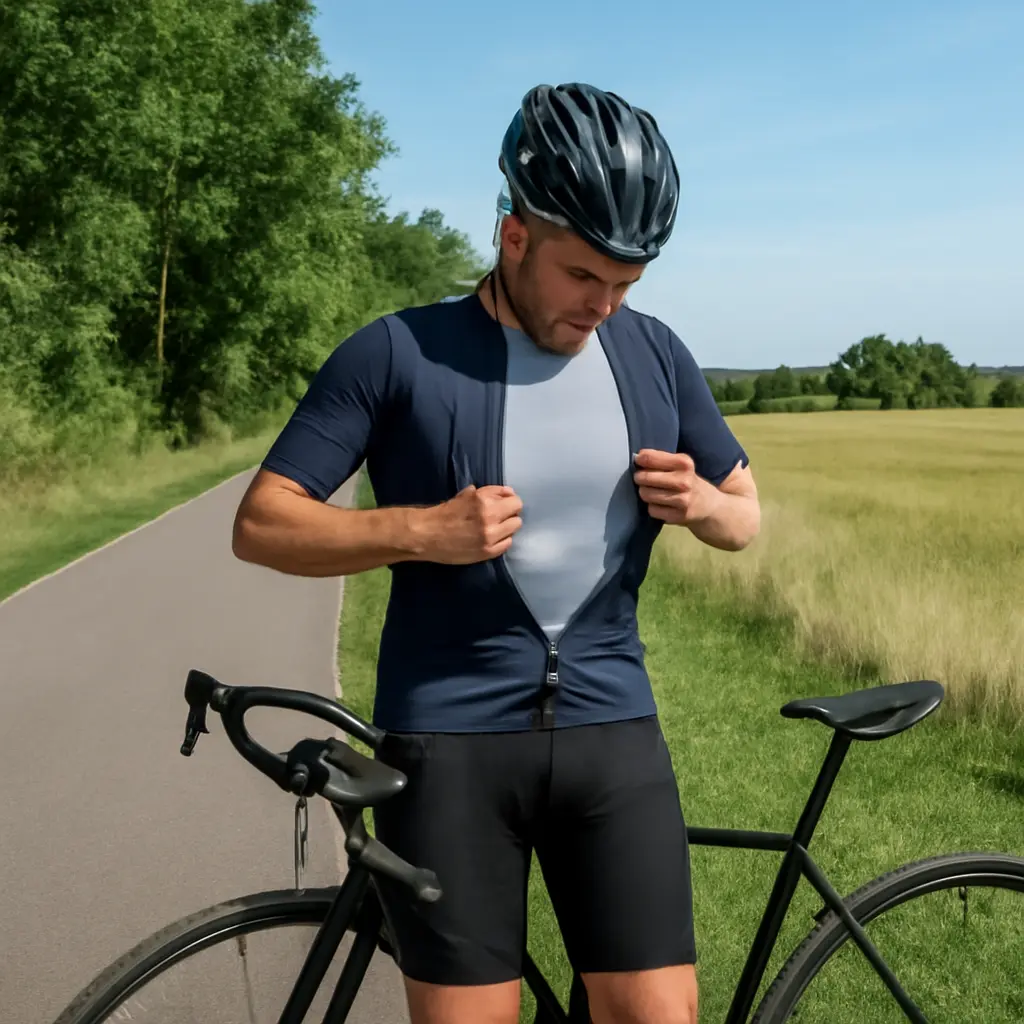
Night Riding Visibility Integrating Active Lighting With Passive Reflective Material Strategies
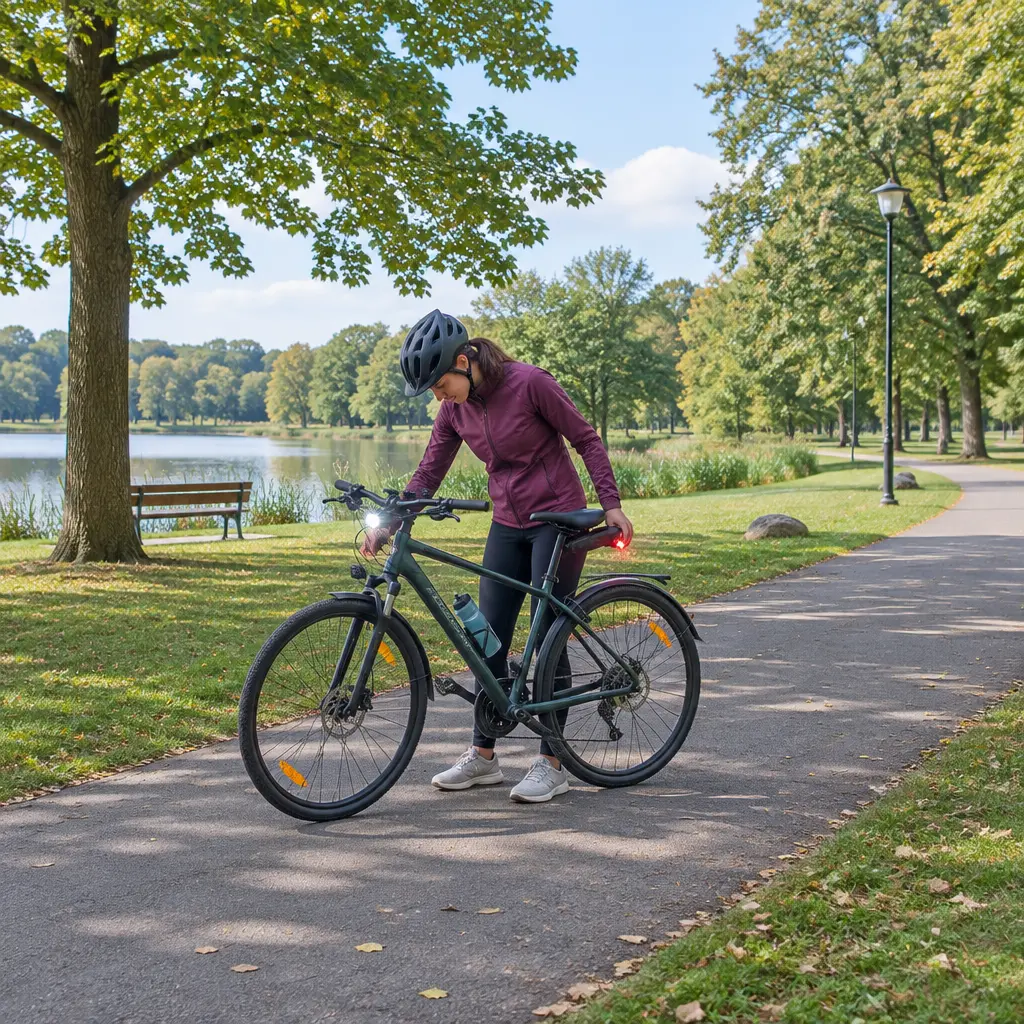
Night-riding visibility is the ability of a cyclist or other road user to be detected and recognized in low light. It is strongest when active lighting—lights that emit their own light—is combined with passive reflective materials that return light from vehicle headlights toward its source. Neither approach replaces the other: a front lamp can help a rider see and be seen, while reflective details can make the rider’s movement and outline easier for drivers to notice. The distinction matters because, according to the U.S. National Highway Traffic Safety Administration (NHTSA), 32% of U.S. bicyclist fatalities in 2022 occurred between 6 p.m. and 8:59 p.m.; a layered system, fitted and aimed correctly, offers a practical way to improve conspicuity without treating visibility equipment as a guarantee of safety.
Combining Active Lighting and Passive Reflection for Night-Riding Visibility
Active lighting and passive reflection are complementary visibility strategies. Active lights generate illumination and can be seen without a car’s headlights, whereas reflective materials rely on incident light—usually vehicle headlights—and send some of it back toward the source. Together, they address different conditions: lights are valuable on unlit roads and in changing weather, while reflectors can create bright, localized signals when headlights reach them. Effective visibility also depends on contrast, placement, beam direction, distance, background clutter, and whether another road user can identify a moving person as a cyclist.
The sections below define the two strategies, explain their main categories and limitations, and show how to combine them in a practical setup. Because legal requirements differ by jurisdiction, riders should also check local rules for required lights, colors, and operating hours.
Active Lighting Defines the Emission Side of Night-Riding Visibility
Active lighting is visibility equipment that emits light using a powered source, typically a bicycle headlamp, rear lamp, or wearable light. The U.S. Consumer Product Safety Commission’s federal bicycle-equipment regulation, 16 CFR § 1512.16, specifies reflectors for covered bicycles but does not establish a universal brightness standard for aftermarket lights. In practice, light output is commonly described in lumens, while beam shape, optics, mounting height, and aim determine where that light goes and how useful it is.
Active-lighting subtypes include forward-facing lamps for seeing the route, rear-facing lamps for signaling the rider’s presence, and supplementary side or wearable lights. Their functions differ: a powerful road lamp may illuminate hazards but can dazzle approaching people if aimed poorly; a compact rear light can mark the rider without illuminating the road. The next step is to distinguish these jobs and choose equipment accordingly.
Forward-Facing Headlights
A bicycle headlight is an active front light used both to illuminate the route and to make the bicycle more visible. For seeing, select a beam appropriate to the riding environment: a controlled, shaped beam can light the roadway while limiting glare, whereas a broad or high-output beam may be more suitable off-road. Mount the lamp securely and aim it down toward the travel surface rather than directly into approaching eyes.
Lumens alone do not describe real-world performance. Two lights with the same nominal output may differ substantially in beam concentration, usable distance, spill, runtime, and glare. For example, a dark rural route needs enough forward illumination to reveal surface hazards, while a well-lit urban street may call for a lower, less dazzling beam focused on being noticed. Riders should test the beam in the conditions they actually encounter and use the manufacturer’s runtime information as a planning guide.
Rear Lights and Flashing Modes
A rear light is an active red light intended to alert traffic approaching from behind. Many models offer steady and flashing modes. Flashing can attract attention, but it does not illuminate the road and may make distance or motion harder for some observers to judge; steady light provides a continuous position cue. A suitable mode depends on the setting, local law, ambient lighting, and the light’s design.
Rear lights should be mounted so they remain visible and are not obscured by bags, clothing, or the rider’s body. Check the battery before departure and avoid relying on a single light when a long or remote trip makes a failed battery difficult to replace. Where permitted, a steady rear light paired with a separate flashing light can provide both a stable reference and an attention-getting signal, but avoid arrangements that cause confusing glare.
Side and Wearable Lights
Side lights and wearable lights add visibility from angles that a front-and-rear pair may not cover. Examples include wheel or fork lights and small lamps attached to a helmet or clothing. They can be useful at junctions, where traffic approaches from the side, but they should supplement rather than replace correctly positioned front and rear lights.
Wearable lights move with the rider, which can help signal motion, but a head-mounted lamp may shine into drivers’ eyes when the rider looks up. Keep any wearable beam aimed responsibly and check that it does not conflict with required bicycle lighting. Active lights are most useful when their coverage is planned; passive materials can then add a different kind of signal without depending on the rider’s battery.
Passive Reflective Materials Define the Return-Light Side of Night-Riding Visibility
Passive reflective material is a surface that returns light toward its source without generating light of its own. Retroreflective products use optical structures—commonly glass beads or microprisms—to send a substantial portion of incoming light back toward the headlamp that illuminated them. The Federal Highway Administration describes retroreflectivity as a property that improves nighttime visibility by directing light back toward its source. Because reflection depends on incident light and viewing geometry, reflective gear cannot replace a lamp on a dark road.
Common subtypes include bicycle-mounted reflectors, reflective clothing, reflective tape, and retroreflective components integrated into footwear or bags. Their effectiveness varies with material quality, angle, cleanliness, placement, and how much of the surface is exposed. Unlike active lights, reflective materials use no battery and can remain useful when a lamp runs out of power, provided a vehicle’s headlights illuminate them.
Bicycle-Mounted Reflectors
Bicycle reflectors are fixed retroreflective devices intended to return headlight beams toward motorists. The U.S. Consumer Product Safety Commission’s bicycle regulation, 16 CFR § 1512.16, specifies reflectors on covered bicycles, including front, rear, pedal, and side-reflector provisions, with particular requirements depending on the bicycle design. These regulatory requirements are a baseline, not a reason to assume every reflector is clean, correctly installed, unobstructed, or sufficient for every riding condition.
Pedal reflectors are especially useful because their alternating motion can help communicate that a moving object is a cyclist. Keep them clean and visible, and ensure accessories or panniers do not block them. A missing, damaged, or dirty reflector reduces the benefit, so include reflector condition in routine bicycle checks.
Reflective Clothing and Accessories
Reflective clothing uses retroreflective strips, panels, or trims on jackets, vests, trousers, gloves, helmets, and bags. Its key advantage is that material can be placed at several points on the rider, making the person’s outline more recognizable than a single small reflector mounted on a frame. Visibility still depends on a vehicle’s headlights reaching the material and on the panels being uncovered and oriented toward traffic.
High-visibility fluorescent colors and retroreflective materials serve different purposes. Fluorescent fabric can improve daytime visibility by converting ultraviolet energy into visible light, but its advantage diminishes at night when ultraviolet illumination is limited. Retroreflective details work at night when headlights strike them. A garment combining bright daytime color with reflective nighttime trim can therefore serve across changing light conditions, though neither guarantees that a driver will see the rider.
Reflective Tape, Footwear, and Motion Cues
Reflective tape and footwear details let riders add retroreflective surfaces where they are most likely to be seen. Placing reflective material on moving parts—such as ankles, shoes, or pedals—can create a recognizable up-and-down motion pattern. The principle is not that movement makes a rider invulnerable, but that a moving human outline may provide more information than a stationary point of light.
Use products designed for the intended surface and follow their application instructions. Tape attached to a curved, dirty, wet, or flexible surface may peel or perform inconsistently. Keep reflective areas clean, inspect them for wear, and avoid covering legally required reflectors or using colors and placements prohibited by local rules. This attention to geometry and maintenance leads directly to the central question: how should active and passive strategies be combined?
Integrated Lighting and Reflection Create Layered Night-Riding Visibility
An integrated visibility system combines light emission with retroreflection so a rider can be conspicuous before, during, and outside a vehicle’s headlight beam. Active lights can help reveal the rider on unlit roads or when headlights are not aimed directly at them; passive reflectors can return a driver’s own headlights toward that driver. The U.S. National Highway Traffic Safety Administration reported that 32% of bicyclist fatalities in 2022 occurred from 6 p.m. to 8:59 p.m., underscoring the importance of visibility during evening travel while not proving that any single device prevents a crash.
A practical combination is a properly aimed front light, a visible rear light, required bicycle reflectors, and reflective details on moving parts of the rider. Add side visibility where junctions or cross-traffic are common. This layered arrangement addresses several directions and failure modes, but it should be paired with safe speed, predictable riding, and route awareness.
Match the System to the Road and Ambient Light
On an unlit road, prioritize a headlight that illuminates the path, a rear light, and reflectors or reflective clothing that can respond to approaching headlights. In a lit urban area, the rider may need less forward illumination but still benefits from being conspicuous against visual clutter. In rain or fog, visibility can decline and light may scatter; use equipment carefully, keep lenses clean, and do not assume that adding brightness alone solves the problem.
The correct setup also depends on travel speed and surface hazards. A rider moving faster needs more distance to detect and respond to obstacles, so forward-light range and beam control become more consequential. Conversely, in traffic with close-following vehicles, a bright or poorly aimed rear lamp can be uncomfortable. Test equipment from the perspective of other road users where practical, and follow product guidance and local regulations.
Use Placement to Communicate Shape and Direction
Placement affects whether a driver can recognize a rider rather than merely notice an isolated light. A rear lamp establishes the bicycle’s position, while reflective details on pedals, ankles, or legs can reveal characteristic movement. Reflective material on the sides of a bicycle or clothing can improve visibility at oblique angles, where a rear-facing lamp may be less apparent.
Do not let a backpack, long coat, child seat, or cargo obscure lights and reflectors. Keep a front light visible from the front and a rear light visible from behind. Wearable lighting can supplement that arrangement, but should not be mounted or aimed in a way that blinds others or makes the rider’s direction ambiguous.
Maintain, Test, and Carry Backup Power
Visibility equipment works only when it is functional. Before riding, check that lights switch on, mounts are secure, batteries have adequate charge, and reflectors are clean and unobstructed. For rechargeable lights, plan around the manufacturer’s stated runtime and use a backup light or power source on longer journeys. For replaceable batteries, carry spares when practical.
A simple pre-ride check can catch common failures: switch on each light, inspect the beam direction, confirm rear visibility, and look for damaged or missing reflective components. Recheck after a crash, repair, or change to luggage. These small steps support a broader principle: visibility should be treated as a maintained system, not a one-time purchase.
Conclusion: Layered Night-Riding Visibility Requires Both Light and Reflection
Active lighting provides self-generated illumination and a visible signal; passive reflective materials return headlight beams toward their source. Headlights, rear lights, bicycle reflectors, reflective clothing, and motion-revealing details each have distinct strengths and limitations. Combining them—then matching placement and output to the route, keeping equipment maintained, and complying with local rules—creates a more robust visibility strategy than relying on one device alone.
The evening fatality data reported by NHTSA show why night-riding visibility deserves attention, but no light or garment can ensure that a rider will be seen or prevent a collision. Cyclists should review their equipment before the next ride, choose a setup suited to their conditions, and consult local transport authorities for current lighting requirements and further safety guidance.
Sources: National Highway Traffic Safety Administration, Traffic Safety Facts: Bicyclists and Other Cyclists, 2022 Data, https://crashstats.nhtsa.dot.gov/Api/Public/ViewPublication/813591; U.S. Consumer Product Safety Commission, 16 CFR § 1512.16—Requirements for reflectors, https://www.ecfr.gov/current/title-16/chapter-II/subchapter-C/part-1512/section-1512.16; Federal Highway Administration, Visibility: Retroreflectivity, https://highways.dot.gov/safety/other/visibility/retroreflectivity
Related Post
The hidden cost of buying bike bags without testing weight distribution
A bike bag is luggage mounted to a bicycle, but choosing one by appearance or [...]
Keeping your ears warm without sacrificing safety on icy morning commutes
Warm ears matter on icy morning commutes, but hearing traffic, warnings, and other people is [...]