Commuter Bike Durability Choosing Corrosion-Resistant Components For All-Weather Reliability
A commuter bicycle’s durability depends not only on its frame but also on how well its exposed components resist corrosion. Corrosion-resistant bike components are parts and protective finishes that slow damage from water, road salt, grime, and sweat. Choosing stainless-steel or suitably coated fasteners, sealed bearings, corrosion-resistant cables, and weather-appropriate lubricants can reduce maintenance and help a bike remain dependable through wet seasons. The U.S. Federal Highway Administration reports that road agencies spend billions of dollars annually on winter operations, including measures that expose roads—and bicycles—to deicing materials. That makes material choice, protective coatings, routine cleaning, and practical replacement decisions central to all-weather commuting.
Corrosion resistance defines commuter-bike component durability
Corrosion resistance is a material’s or surface treatment’s ability to withstand chemical or electrochemical deterioration in its service environment. The National Association of Corrosion Engineers, now AMPP, describes corrosion as the deterioration of a material, usually a metal, resulting from reaction with its environment. For a bicycle, the relevant environment includes rainwater, salt-laden spray, road deicers, dirt that holds moisture, and perspiration. Resistance is not immunity: stainless steel can stain or pit in harsh conditions, coatings can be scratched, and dissimilar metals can corrode where moisture bridges their contact.
The most useful way to evaluate an all-weather bicycle is by component function and exposure. A fastener hidden inside a dry seat tube has a different risk profile from a chain, brake cable, or headset bearing exposed to spray. Corrosion-resistant choices therefore include several related categories: resistant base materials, protective finishes, water-excluding seals, and lubricants or maintenance practices that limit exposure.
Stainless steel and corrosion-resistant alloys
Stainless steel is an iron-based alloy containing at least 10.5% chromium, the threshold specified by the World Stainless Association. Chromium helps form a thin, self-renewing passive film that slows oxidation. Stainless fasteners, spokes, and selected small hardware can be practical upgrades in wet climates, but alloy grade and design matter: stainless steels differ in strength and resistance, and crevices or chloride-rich salt deposits can still cause localized attack. For highly stressed parts such as stems, cranksets, and brake components, choose products designed and rated for bicycle use rather than substituting generic hardware.
Protective coatings and plated components
A coating separates a vulnerable substrate from water and contaminants. Common bicycle examples include anodized aluminum, painted or powder-coated frames, zinc-plated fasteners, and coated chains. A finish remains protective only while intact: abrasion at cable stops, clamp interfaces, and bolt heads can expose the underlying metal. Inspect high-contact areas periodically, and avoid scraping finishes with tools during installation. Coated components are often a cost-effective choice, but a coating’s presence alone does not establish its durability; product construction and intended use matter.
Seals, grease, and barriers at joints
Sealed bearings and protective grease reduce the routes by which water and grit reach moving surfaces. Seals are especially relevant at hubs, the bottom bracket, and the headset, while grease or anti-seize compound can protect suitable threaded interfaces and help prevent parts from seizing together. Sealing is not a guarantee against water intrusion: damaged seals, pressure washing, and neglected service can compromise protection. Follow component-maker instructions, since lubricants and compounds are not interchangeable for every material or interface.
Weather-exposed components determine corrosion risk
Once material and protection types are understood, the next step is to prioritize parts by exposure and consequence. The chain and drivetrain are continuously exposed to spray and abrasion; brake and shift systems collect grime in housings and at cable ends; fasteners can seize at interfaces; and bearings face repeated contamination. The National Highway Traffic Safety Administration and state transportation agencies advise drivers and road users to take winter conditions seriously, while transportation departments commonly use salt and other deicers to maintain road access. For cyclists, this makes post-ride care and component selection especially consequential in regions with frequent winter treatment.
Chain, cassette, and drivetrain
The chain is a sequence of steel links whose pins and rollers need lubrication; it is particularly vulnerable because it is exposed and moves through grit. A corrosion-resistant or coated chain can slow visible rust, but it still needs cleaning and lubrication. The Bicycle Association’s maintenance guidance and major drivetrain manufacturers emphasize keeping the chain clean and lubricated, with intervals adjusted to riding conditions. In wet or salted conditions, wipe the drivetrain after rides and use a lubricant formulated for wet conditions; remove excess lubricant from the outer chain plates because it can attract dirt. Replace a worn chain before it accelerates cassette and chainring wear.
Brakes, cables, and control hardware
Brake and shift cables can corrode at exposed ends or inside housings when water and contamination enter. Stainless inner cables and sealed or well-fitted housing can reduce rust and friction, supporting consistent control feel. Disc-brake rotors are commonly stainless steel, but they can still develop surface discoloration or corrosion when left wet; braking usually removes light surface oxidation, whereas deep pitting or damage calls for inspection and possible replacement. Keep lubricants away from brake pads and rotor braking surfaces, and have uncertain brake performance checked promptly.
Fasteners, bearings, and frame interfaces
Bolts, seatposts, pedal threads, and bearing interfaces can corrode or seize when moisture remains trapped between parts. Use the specified fastener material and torque, and apply an appropriate assembly compound where the manufacturer permits it. Avoid mixing metals without considering galvanic corrosion, an electrochemical process that can occur when dissimilar metals contact in the presence of an electrolyte such as salty water. Aluminum frames and steel or stainless hardware can form such a pairing, so correct grease, anti-seize, isolation, and periodic service are more reliable than assuming stainless hardware solves every interface problem.
Maintenance turns corrosion-resistant choices into year-round reliability
Even durable materials need a simple care routine. The practical goal is to remove corrosive residue, dry moisture-prone areas, restore lubrication, and catch damage before it affects safety. The League of American Bicyclists recommends regular bicycle inspection and maintenance; riders can adapt that principle to climate by checking more often during wet or salted periods.
After wet or salted rides
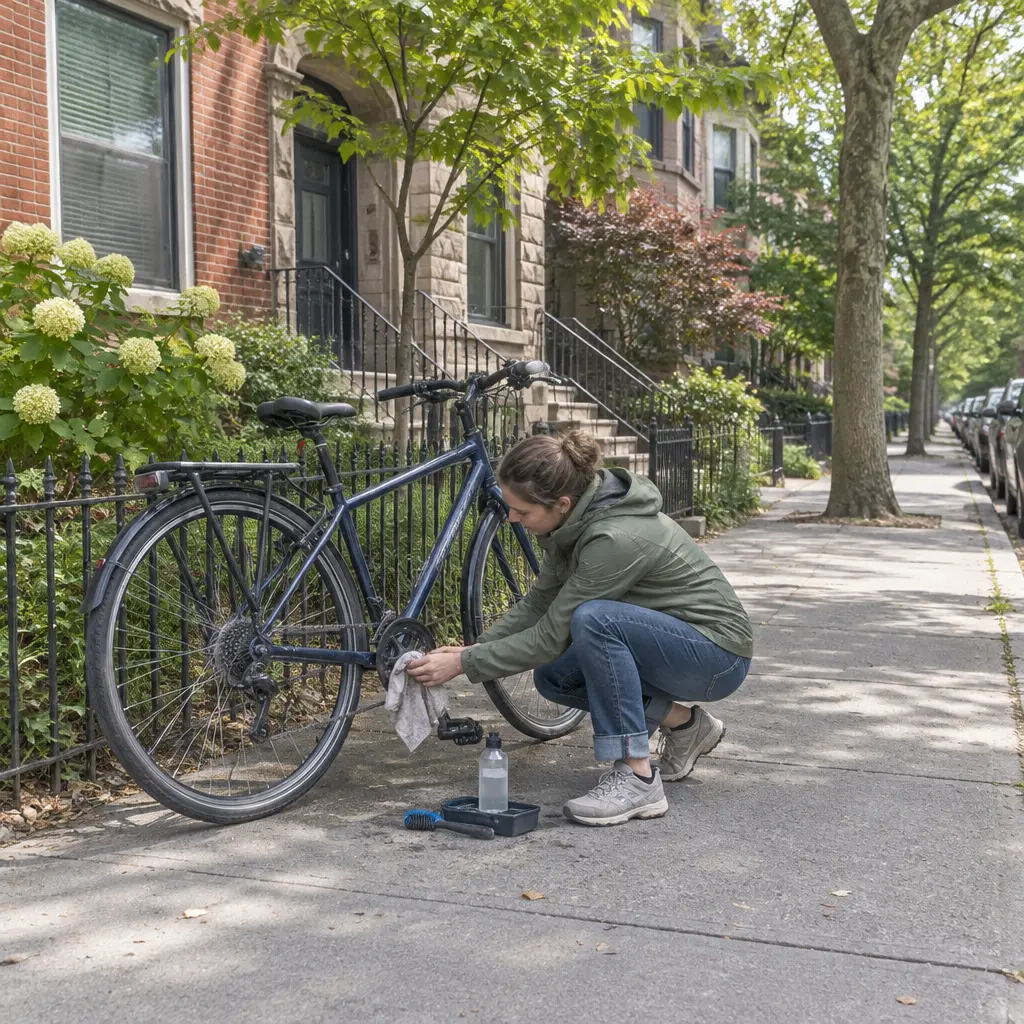
Rinse or wipe away salt and grit using low-pressure water and a soft cloth, then dry the chain, bolts, and crevices. Avoid forceful spray directed at bearing seals, because pressure can drive water past them. Relubricate the chain after cleaning and check exposed fasteners, cable ends, and the underside of the frame for residue or chipped finishes. A brief routine performed consistently is generally more effective than leaving salt deposits in place until a major service.
Seasonal inspection and replacement
Inspect the chain for stiffness, rust, and wear; verify that brakes operate smoothly; and look for pitting, loose hardware, damaged seals, and paint or coating failures. A chain-wear gauge provides a more dependable replacement decision than appearance alone. Replace safety-critical parts when they are cracked, deeply corroded, excessively worn, or outside the manufacturer’s service limits. If a bolt is seized or a bearing feels rough, professional service can prevent damage to the frame or component while restoring safe operation.
Choosing upgrades by value and exposure
For a commuter on a limited budget, prioritize parts that see the most contamination or create the greatest reliability risk: a quality chain and lubricant, stainless or appropriately coated cables and fasteners, effective bearing seals, and a finish that can be maintained. A corrosion-resistant upgrade is most valuable when it reduces recurring labor or prevents a failure that could interrupt a commute. Keep a simple service log noting cleaning, chain checks, cable replacement, and bearing work; the log can reveal whether a component or route is generating repeated problems.
Conclusion: corrosion-resistant components support dependable commuting
All-weather bicycle durability comes from matching materials and protective features to exposure. Stainless alloys, intact coatings, sealed bearings, suitable cables, and lubricated interfaces each address a different corrosion pathway, while routine cleaning and inspection preserve their benefits. Because road salt and wet grime can reach the drivetrain, controls, and hidden joints, commuters should prioritize exposed and safety-critical parts rather than treating a corrosion-resistant label as a complete solution. Check the manufacturer’s specifications, inspect the bike more often during wet and salted seasons, and consult a qualified mechanic when corrosion affects braking, steering, or structural components.
Sources: AMPP, “What Is Corrosion?”, https://www.ampp.org/resources/what-is-corrosion; World Stainless Association, “What Is Stainless Steel?”, https://worldstainless.org/about-stainless/what-is-stainless-steel/; Federal Highway Administration, “Winter Operations”, https://ops.fhwa.dot.gov/weather/weather_events/snow_ice.htm; League of American Bicyclists, “Bike Maintenance”, https://bikeleague.org/ridesmart/bike-commuting/bike-maintenance/; Shimano, “Bicycle Maintenance”, https://bike.shimano.com/en-US/information/bike-maintenance.html.
Related Post
How to Read a Bike Spec Sheet Without Getting Lost
A bike spec sheet is the manufacturer’s summary of a bicycle’s parts, measurements, and intended [...]
How to Spot a Good Bike Before You Buy It
A good bike is one that fits your body and intended riding, works safely, and [...]