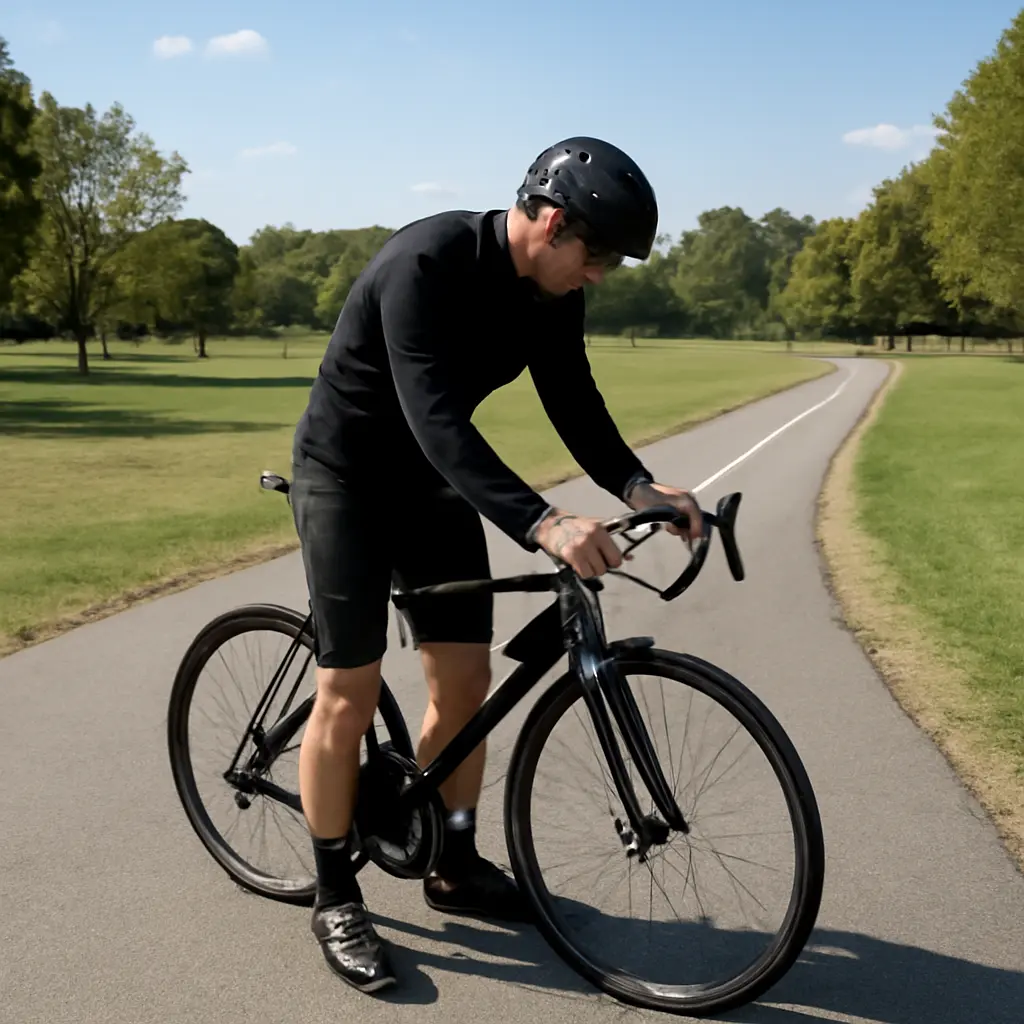
Helmet Safety Standards Understanding MIPS Technology Beyond Basic Impact Certification

A helmet’s basic impact certification shows that it passed a defined set of impact and retention tests; it does not mean every certified helmet manages rotational motion in the same way. MIPS, or Multi-directional Impact Protection System, is a low-friction layer designed to allow limited movement between the helmet and head during certain angled impacts. Understanding the distinction matters because helmet standards, rotational-impact research, and MIPS describe related but different things: certification is a minimum pass/fail safety benchmark, while MIPS is one design approach intended to address forces that conventional tests may not fully represent. This article explains what certification measures, how MIPS works, what research can and cannot establish, and how to choose and use a helmet safely.
Helmet Certification and Impact-Protection Attributes
A helmet safety standard is a documented set of test procedures and performance requirements used to determine whether a helmet is suitable for a specified activity or market. The U.S. Consumer Product Safety Commission (CPSC) defines mandatory bicycle-helmet requirements in 16 CFR Part 1203. Certification is important evidence that a product meets that standard, but it is not a guarantee against injury in every crash, nor does it rank all compliant helmets by overall protection.
Standards differ by helmet type and jurisdiction. A bicycle helmet, a motorcycle helmet, and a snow-sport helmet are not interchangeable merely because each has passed a recognized test. Buyers should check the label and confirm that the standard applies to the activity for which the helmet is intended.
What basic impact certification tests
For bicycle helmets sold in the United States, the CPSC standard includes impact-attenuation tests, tests of the retention system and its strength, positional stability, and coverage requirements. In impact tests, a helmeted test headform is dropped onto specified anvils under prescribed conditions, and the resulting acceleration is measured. The standard sets limits for the tested conditions; passing means the helmet met those requirements in the laboratory, not that it will prevent all head injuries in an unpredictable real-world collision.
Other standards use their own methods and thresholds. For example, the Snell Memorial Foundation publishes voluntary helmet standards for certain activities, while the Economic Commission for Europe (ECE) sets regulations for motorcycle helmets. The relevant mark depends on the helmet category and the country where it is sold or used.
What certification does not tell consumers
A pass mark does not establish that every certified model performs identically in every direction, speed, or crash configuration. Nor does a conventional impact test necessarily measure all aspects of rotational acceleration or strain on brain tissue. The Insurance Institute for Highway Safety (IIHS) notes that helmet standards are designed to assess performance under specified test conditions; shoppers should not read certification as a complete prediction of an individual crash outcome.
This is where rotational-impact design enters the discussion. MIPS is not a replacement for a recognized safety certification: it is a helmet feature that may be added to a helmet that must still meet the applicable standard.
Rotational-Impact Management and MIPS Attributes
Rotational-impact management refers to design strategies intended to reduce or redirect some rotational motion transmitted to the head during an angled impact. MIPS describes its system as a low-friction layer inside the helmet that permits a small amount of relative movement between the helmet shell and the head. The company says the design is inspired by the brain’s own protective movement within the skull, but a helmet system is not a literal substitute for that biological protection.
The underlying concern is that an oblique impact can produce both linear acceleration and rotation. Researchers study rotational kinematics because rotational motion may contribute to brain injury, but no single helmet feature can eliminate risk. MIPS is one example among several approaches, including slip-plane liners, elastomeric elements, and other proprietary rotational-management designs.
How a MIPS layer works
In many MIPS-equipped helmets, a thin low-friction layer sits between the comfort padding and the helmet’s energy-absorbing structure. During certain angled impacts, the layer is intended to let the helmet move slightly relative to the head, commonly described by MIPS as approximately 10–15 millimetres in some directions. The precise construction and movement vary by model; not every product uses an identical internal arrangement.
The goal is to reduce some rotational motion reaching the head in particular test scenarios. The system does not make a helmet “rotation-proof,” and its presence alone does not reveal how a helmet will perform across every impact condition. Fit, coverage, shell and liner design, and correct fastening remain essential.
MIPS variants and related technologies
MIPS is a family of designs rather than one universal insert. Depending on the helmet, the low-friction concept may be integrated with padding, attachment points, or other internal components. Other manufacturers use different systems intended to manage rotational forces, such as proprietary slip planes or structures that deform or move under selected loads. These approaches share a broad aim but are not automatically equivalent in construction or performance.
When comparing products, look at the complete helmet rather than treating a technology name as a standalone safety rating. Independent testing can help compare models under a stated protocol, while fit and activity-specific certification establish whether the helmet is appropriate for the wearer and use.
Research Evidence and Its Limits
Evidence about helmet technologies comes from laboratory tests, computational models, field observations, and injury research. Each method answers a different question. A laboratory result may show reduced measured rotational acceleration in a particular setup; it cannot by itself prove a specific reduction in real-world concussion risk for every rider or crash.
Independent laboratory comparisons
Virginia Tech’s helmet ratings use impact tests and a STAR evaluation method to compare selected helmets, including tests intended to represent oblique impacts. Its ratings are a comparative research resource, not a government certification or a guarantee of individual outcomes. Results should be interpreted within the test protocol and the models included in the evaluation.
A 2018 study published in the journal Injury Epidemiology examined bicycle-helmet use and concussion among cyclists treated in U.S. emergency departments. It reported lower odds of concussion for helmet users than non-users in its analyzed sample, while also noting limitations inherent in observational data. That research supports helmet use generally; it does not isolate MIPS as the cause of an outcome.
Why laboratory performance is not a clinical guarantee
Impact severity, angle, surface, speed, helmet fit, and the rider’s circumstances all affect injury risk. Test protocols necessarily simplify those variables. A lower measured value in one test configuration can be useful evidence of performance under that condition, but it should not be presented as proof that a technology prevents a fixed percentage of concussions in everyday use unless a suitable clinical study supports that exact claim.
The practical conclusion is balanced: choose a properly certified helmet that fits and is designed for the activity; consider rotational-impact features as an additional design attribute; and avoid interpreting any single badge or test score as a guarantee.
Choosing and Using a Helmet Safely
A helmet’s protective value depends not only on its design but also on selection, fit, condition, and use. The U.S. National Highway Traffic Safety Administration and CPSC advise consumers to use helmets appropriate to the activity and to follow manufacturer instructions. A more expensive helmet or a rotational-management feature cannot compensate for an incorrect size or an unfastened strap.
Fit, fastening, and activity-specific approval
- Choose a helmet labeled for the intended activity and carrying the applicable certification mark.
- Try it on before buying when possible. It should sit level, feel snug without painful pressure, and remain stable when you move your head.
- Adjust the retention system and chin strap according to the manufacturer’s instructions; fasten the strap every time.
- Check that the helmet’s coverage and design suit the activity, and do not assume a bicycle helmet is appropriate for motorcycling or another higher-energy use.
Replacement and post-impact care
Replace a helmet after a significant impact, even if damage is not obvious, because the energy-absorbing liner may have been compressed. Follow the manufacturer’s guidance on service life, storage, cleaning, and inspection. The CDC’s HEADS UP guidance also emphasizes that a helmet does not prevent every concussion; suspected head injury requires appropriate medical assessment.
For a useful comparison, imagine two certified bicycle helmets: one has a conventional liner and one includes a rotational-management layer. Both must meet the applicable certification requirements. The added feature may be relevant when weighing design and independent test results, but the correct choice still depends on fit, intended use, condition, and the evidence available for the specific models.
Conclusion: Certification and MIPS Serve Different Roles
Helmet certification establishes that a helmet meets defined requirements in standardized tests. MIPS is a rotational-impact design intended to permit limited movement between the helmet and head during certain angled impacts; it supplements rather than replaces certification. Independent testing and injury research add useful context, but laboratory comparisons are not clinical guarantees, and evidence for helmets generally should not be mistaken for proof of a particular feature’s real-world effect.
For consumers, the most actionable steps are to select an activity-appropriate certified helmet, ensure a secure fit, fasten it correctly, replace it after a significant impact, and compare independent test information where available. For further reading, consult the CPSC standard, Virginia Tech’s helmet-testing methodology, and guidance from the CDC and NHTSA.
Sources: U.S. Consumer Product Safety Commission, 16 CFR Part 1203—Safety Standard for Bicycle Helmets, https://www.ecfr.gov/current/title-16/chapter-II/subchapter-B/part-1203; MIPS, How MIPS Works, https://mipsprotection.com/helmet-safety/how-mips-works/; Insurance Institute for Highway Safety, Bicycle Helmet Ratings and Information, https://www.iihs.org/topics/bicycle-safety; Virginia Tech Helmet Lab, Bicycle Helmet Ratings, https://www.helmet.beam.vt.edu/bicycle-helmet-ratings.html; Bambach, M. R. et al., “The effectiveness of helmets in bicycle collisions with motor vehicles: A case-control study,” Injury Epidemiology, 2018, https://injepijournal.biomedcentral.com/articles/10.1186/s40621-018-0142-2; National Highway Traffic Safety Administration, Bicycle Safety, https://www.nhtsa.gov/road-safety/bicycle-safety; Centers for Disease Control and Prevention, HEADS UP: Concussion Safety, https://www.cdc.gov/heads-up/.
Related Post

Bicycle Type Selection Matching Frame Geometry To Intended Riding Terrain Reality
Bicycle type selection means matching a bike’s frame geometry and components to the surfaces, gradients, [...]
Frame Size, Gears, and Budget Breakdown for the Completely Lost Beginner
A bicycle’s frame size is the fit dimension that helps determine whether the rider can [...]